Nafas - نَفَس : Residential Complex

Idea projektu
How can architecture respond to the fragmented urban conditions created by redevelopment and population growth in Cairo, where different communities often exist side by side yet remain socially disconnected? This project explores how spatial design can encourage coexistence, visibility, and everyday interaction without claiming to resolve relocation itself.
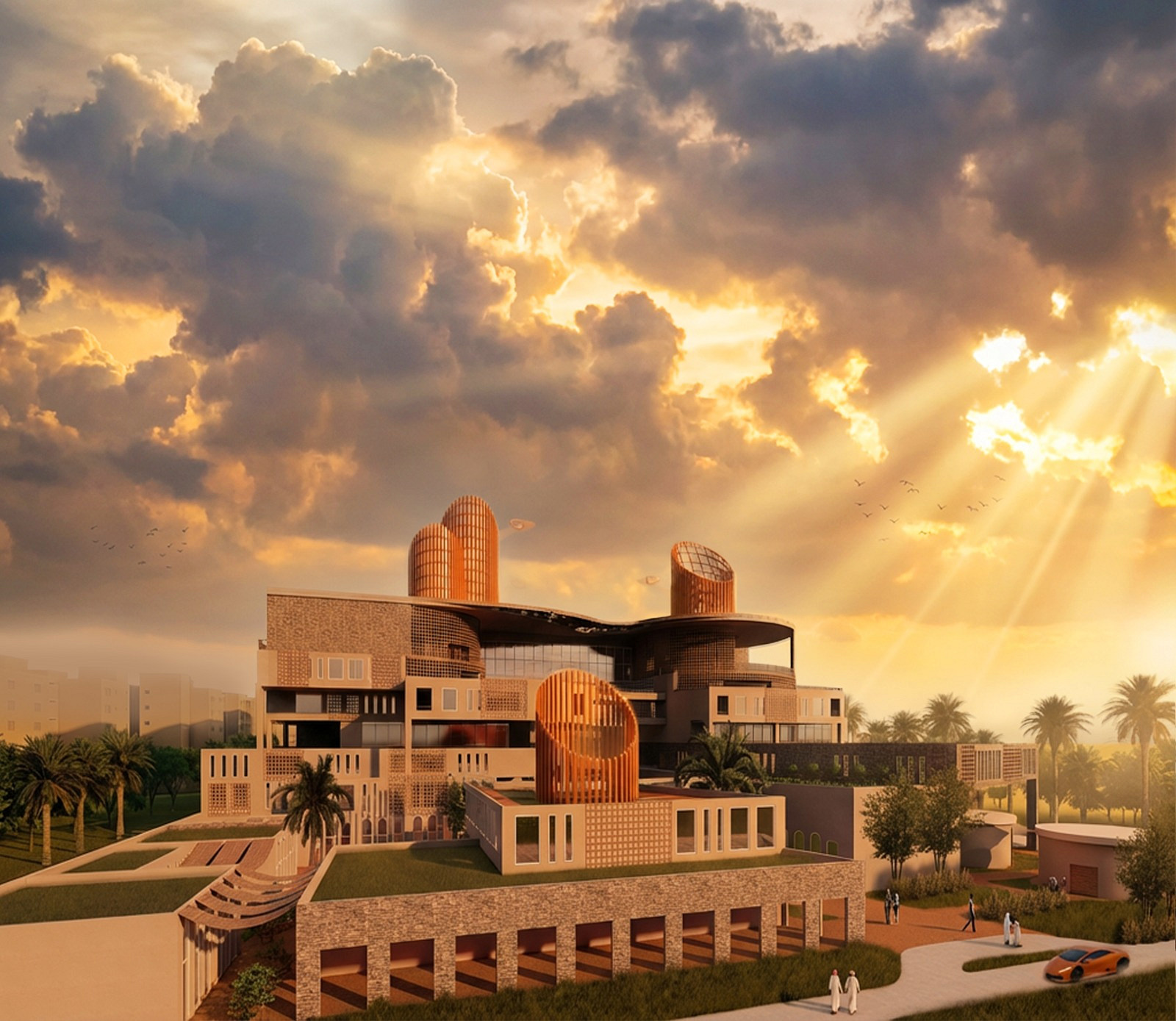
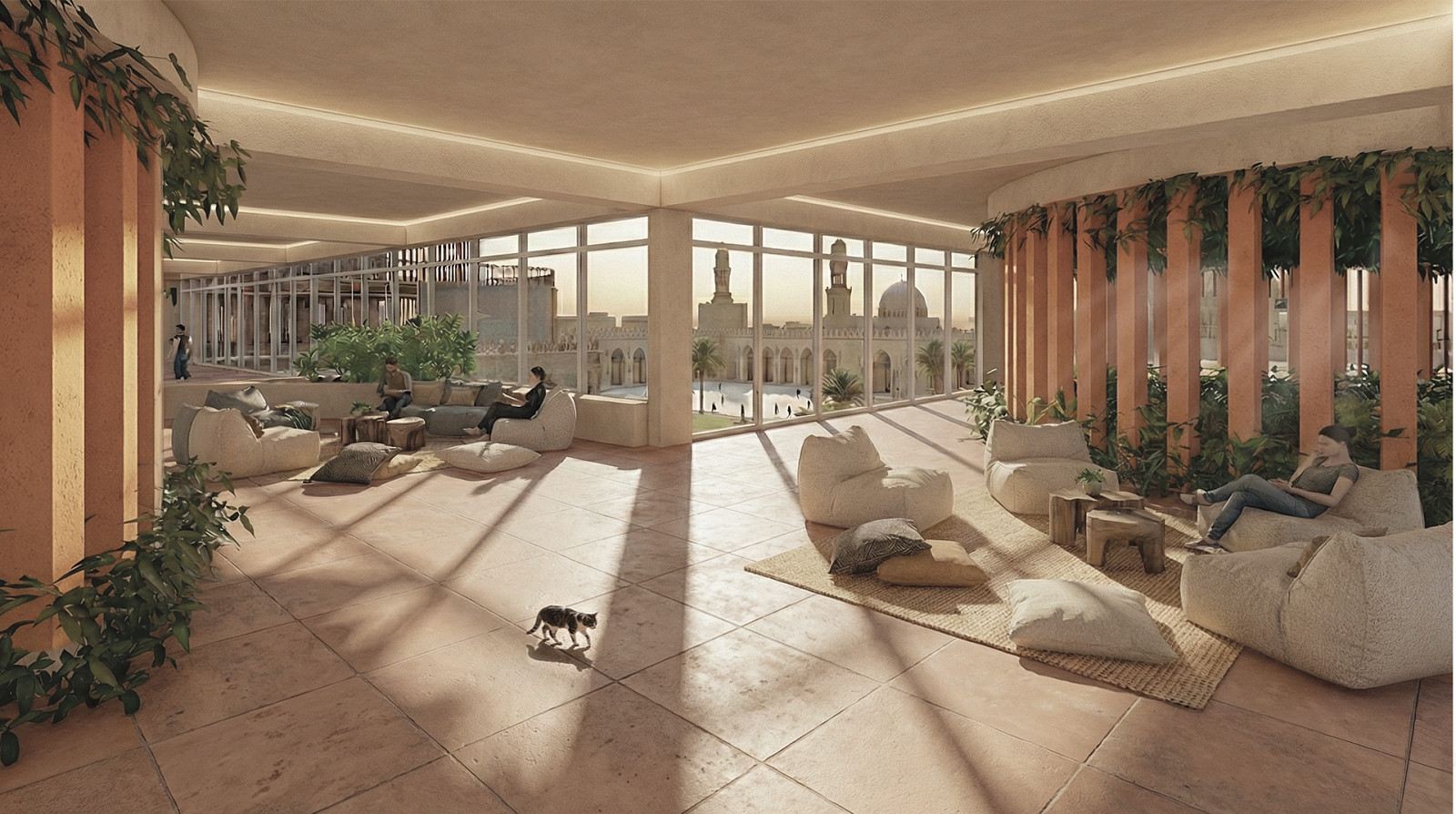
Located in Fatimid Cairo, directly facing Al-Hakim Mosque, Bab El-Fetouh, and Bab El-Nasr, the project sits within a historically and spiritually significant area that attracts continuous tourist activity while remaining closely tied to local daily life. This setting highlights the contrast between active public landmarks and inward-looking residential communities that feel isolated and, at times, unsafe to approach.
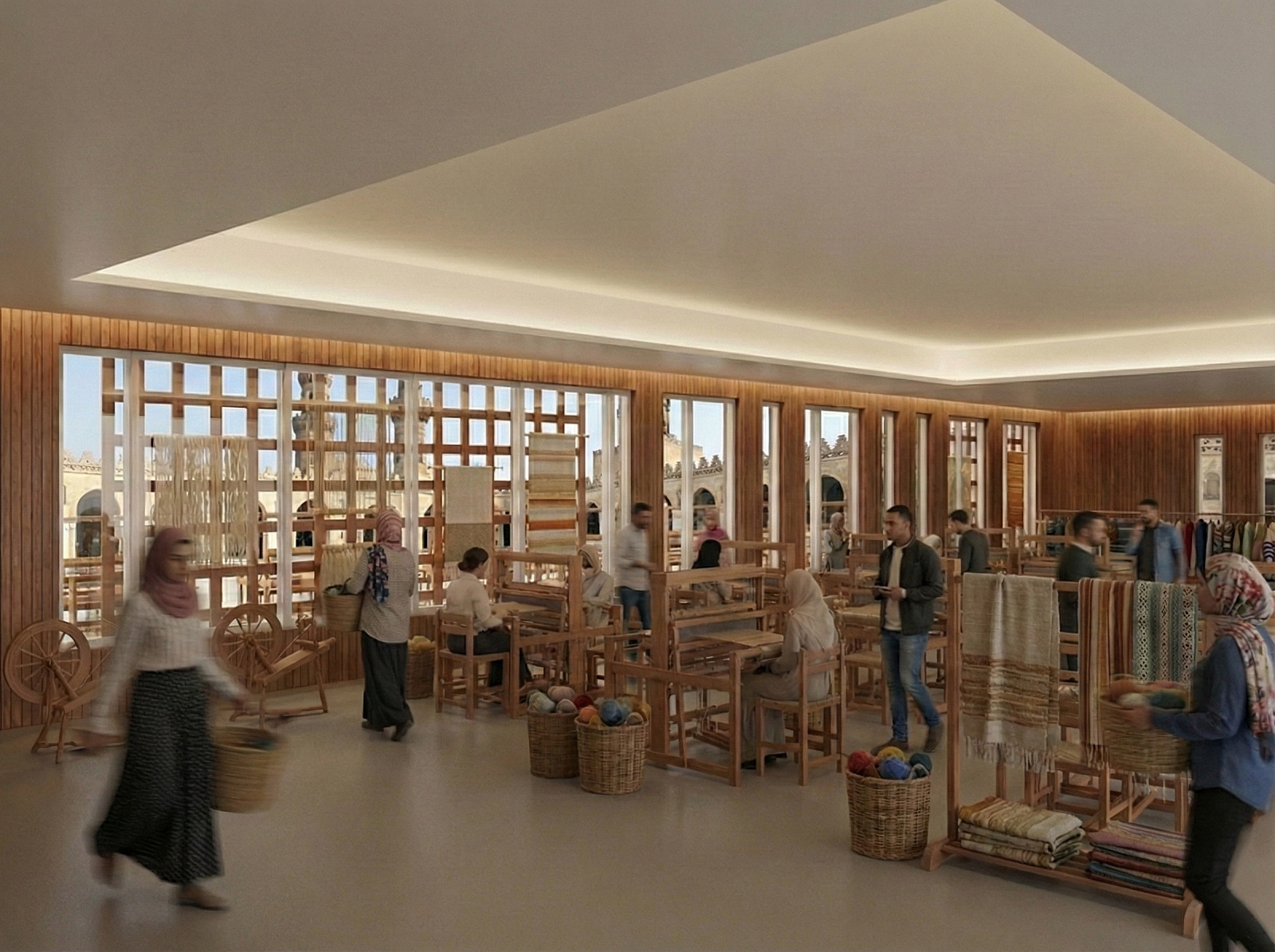
The project proposes a mixed-use residential environment where living spaces coexist with craft studios, workshops, and cultural activities. Rather than separating users or functions, the design introduces shared spaces that allow residents, craftsmen, visitors, and the surrounding community to observe, interact, and engage gradually and safely.
By reinterpreting the spatial logic of traditional Cairo—its alleys, thresholds, and layered transitions—the project seeks to reduce isolation and promote openness. Architecture here acts as a mediator, creating a contemporary community that remains connected to its context, history, and people without enclosing itself behind physical or social barriers.
Popis projektu
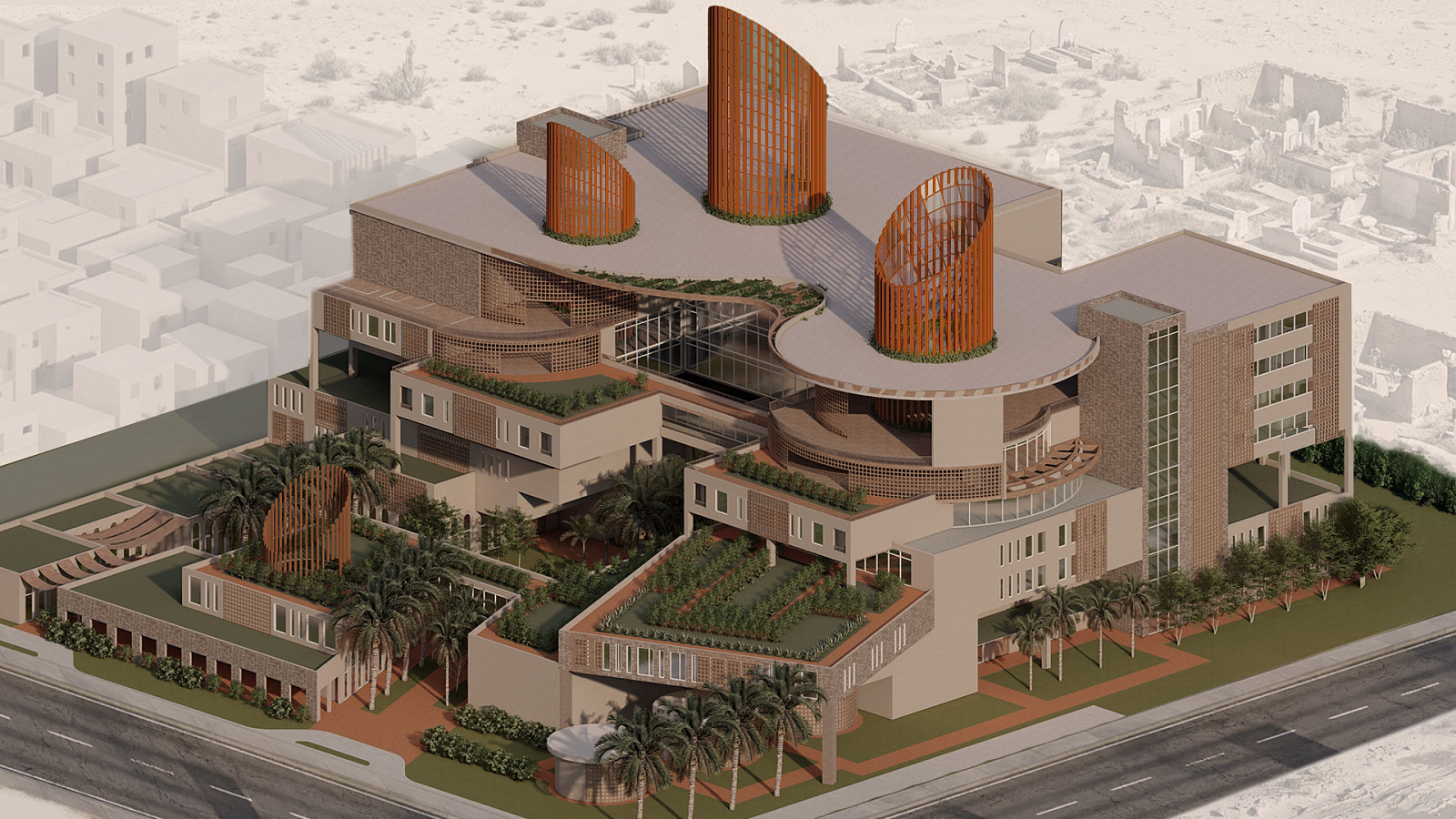
The project is conceived as a vertically layered mixed-use complex that encourages openness, coexistence, and gradual interaction between different user groups. Rather than forming a closed residential enclave, the building is organized to maintain visual and spatial continuity between public, semi-public, and private functions, allowing everyday life, work, and social activity to overlap in a controlled and safe manner.
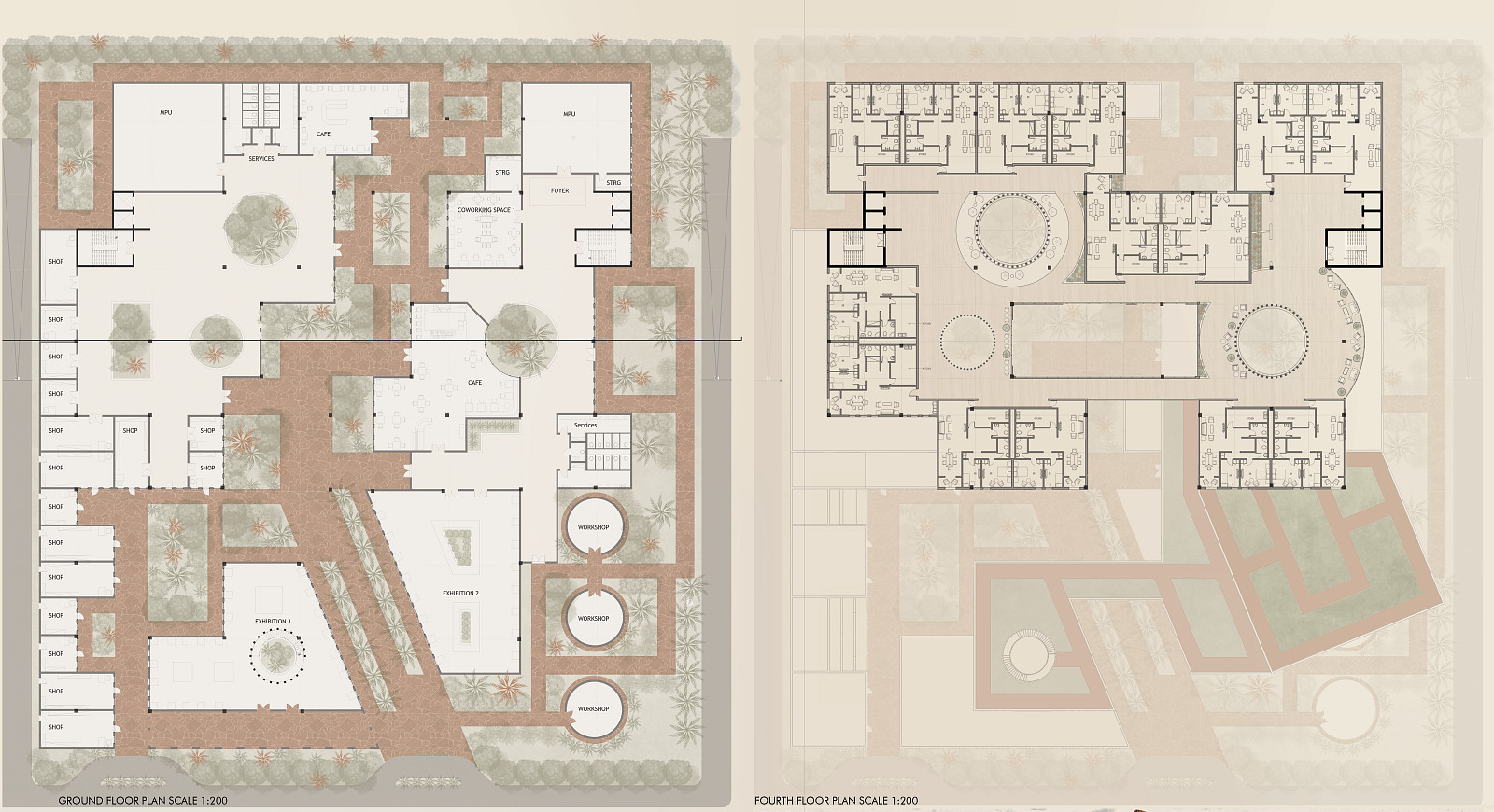
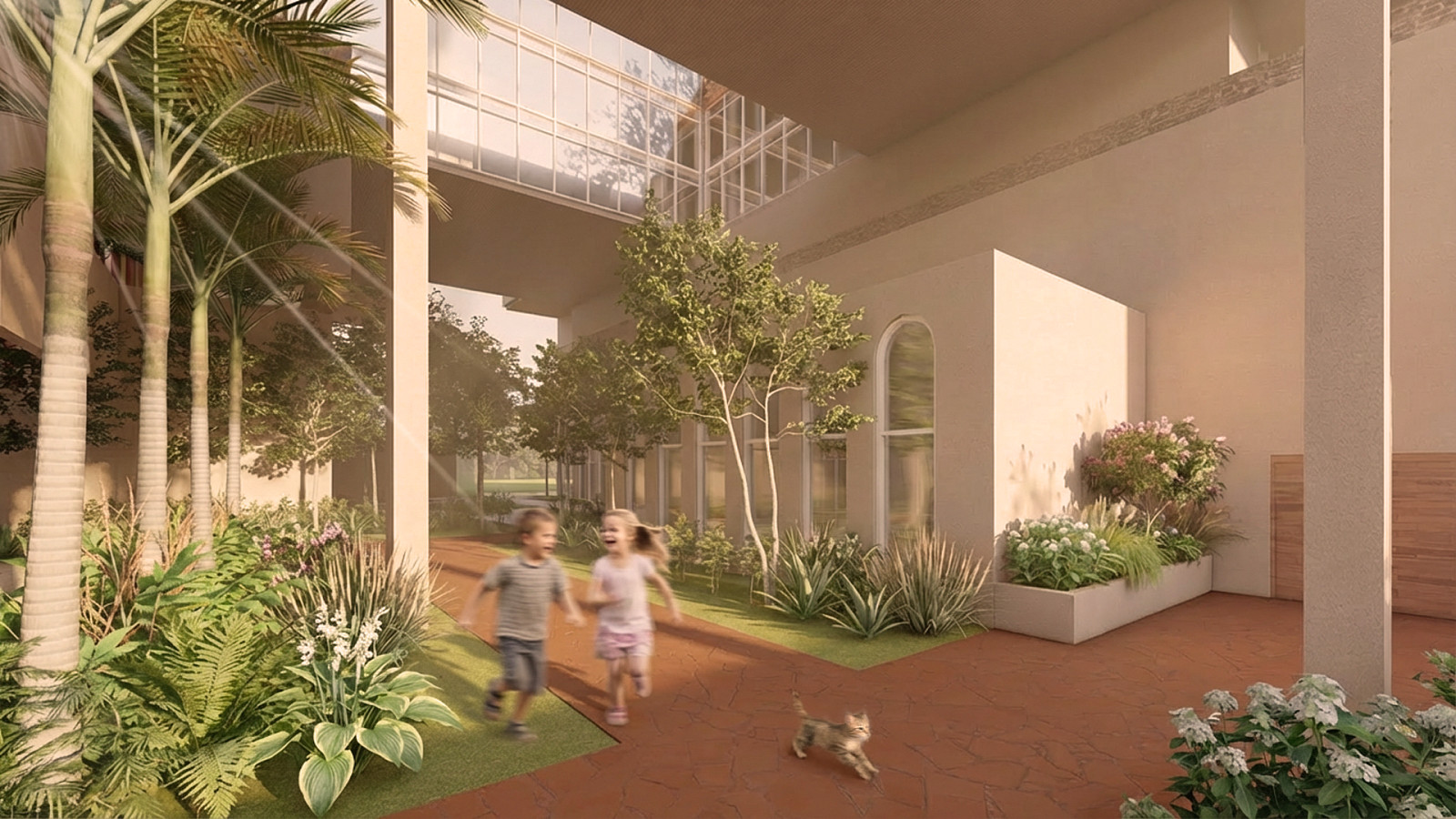
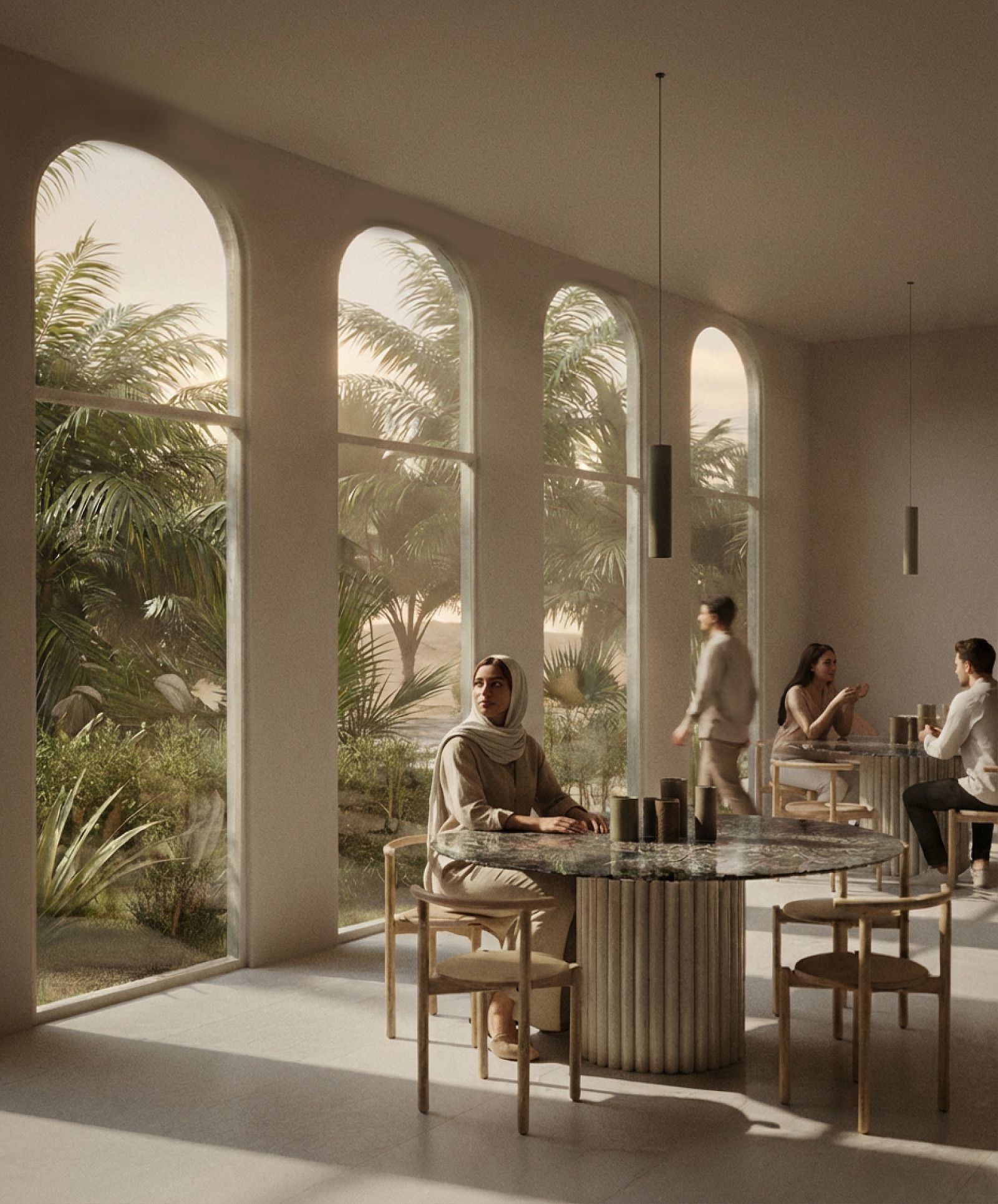
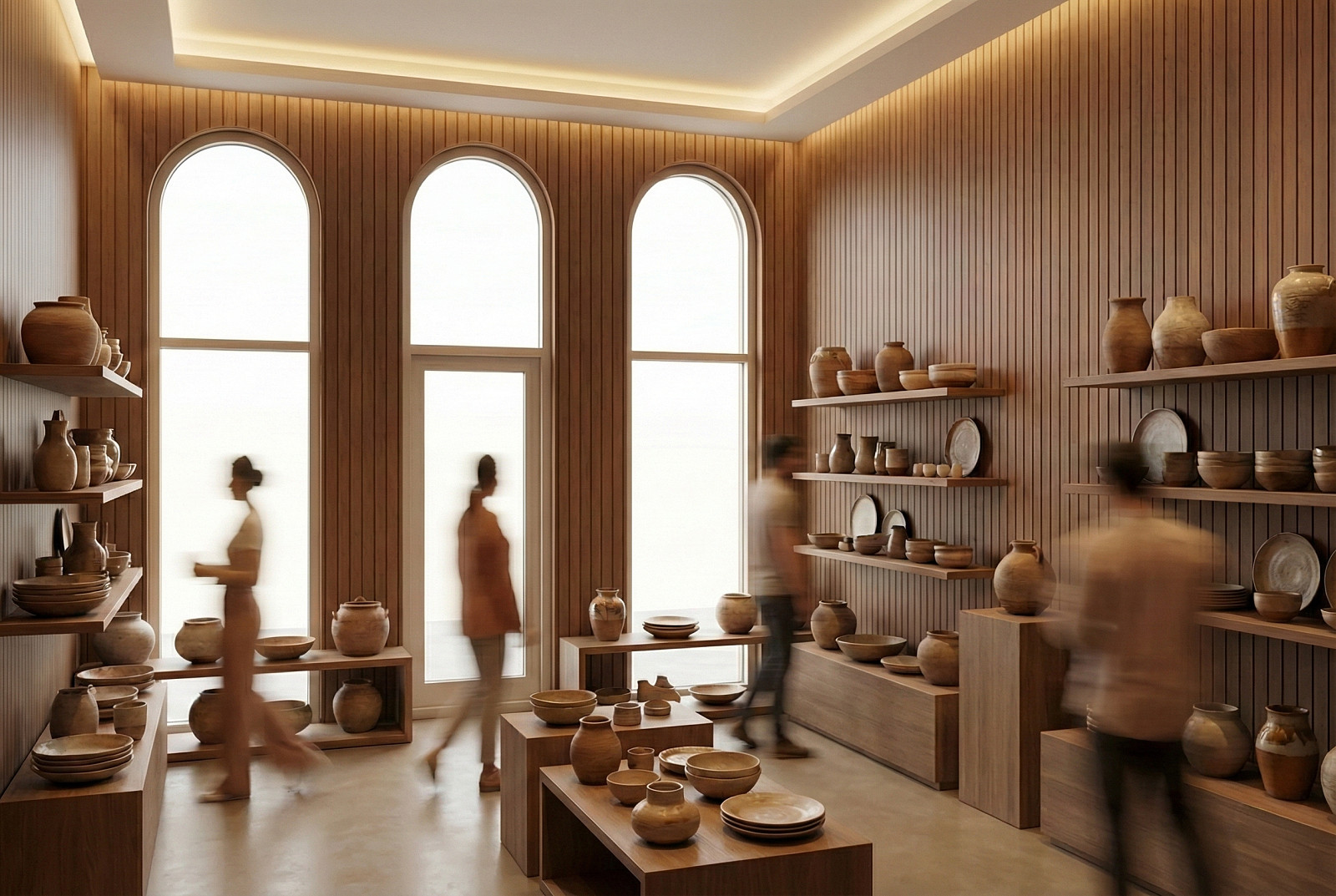
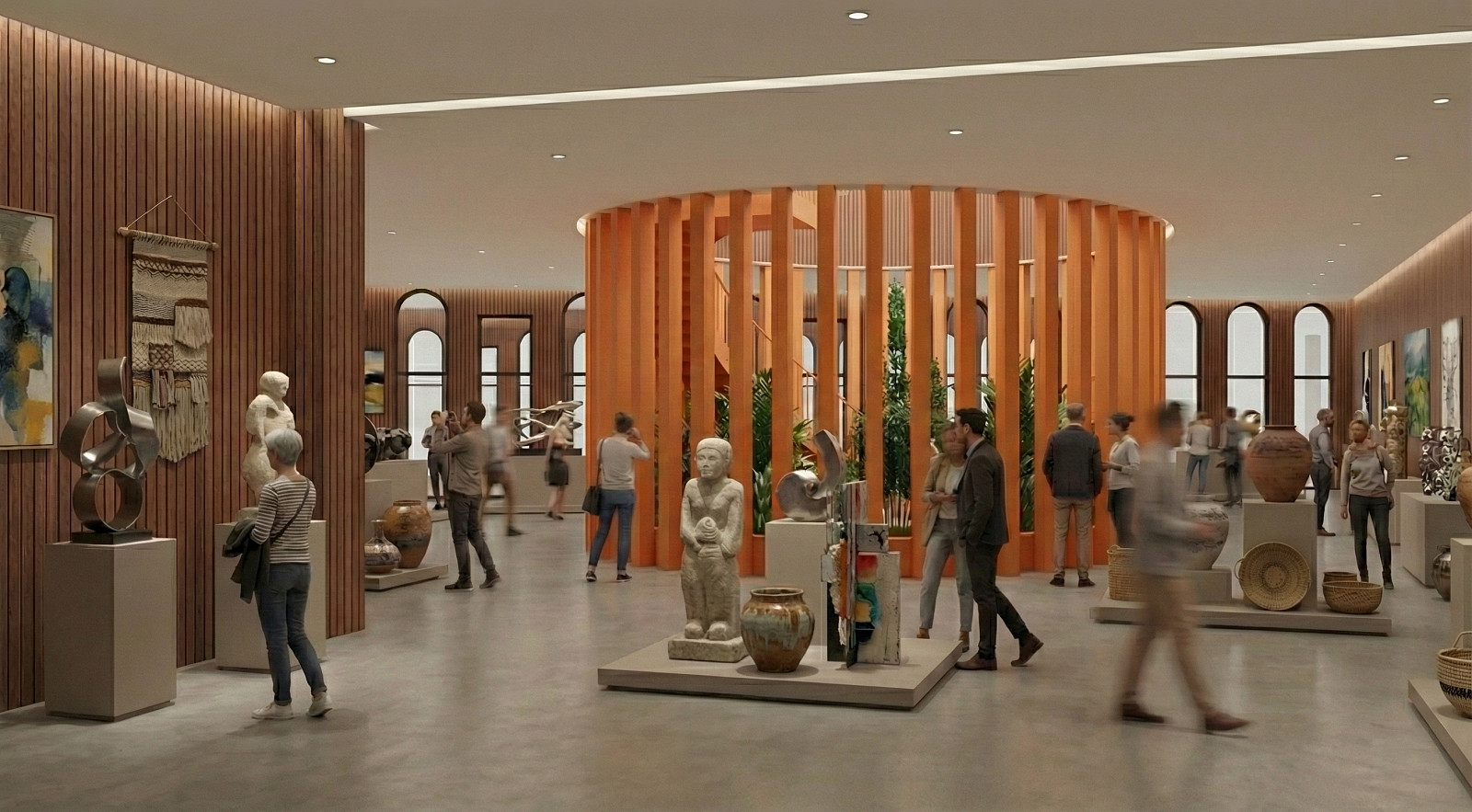
The ground floor functions as an active semi-public layer connected directly to the surrounding streets and internal open spaces. It accommodates commercial units, cafes, working areas, multipurpose units (MPUs), community workshops, and exhibition spaces. These programs activate the street edge and courtyards, encouraging movement, visibility, and interaction between residents, craftsmen, visitors, and the surrounding community.
The first floor contains workshops, offering focused spaces for craft production and hands-on work away from the intensity of public areas, while remaining integrated within the overall program of the project.
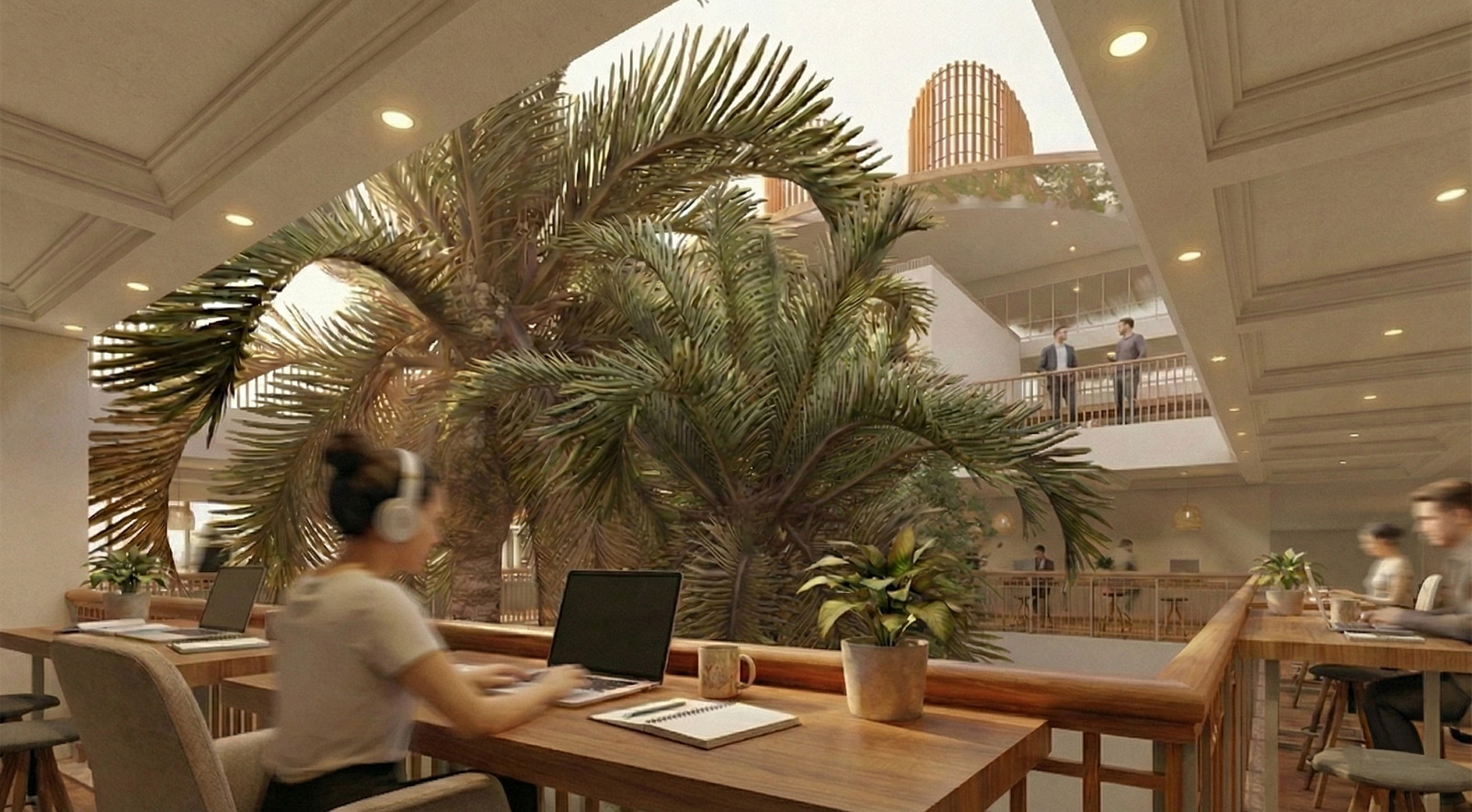
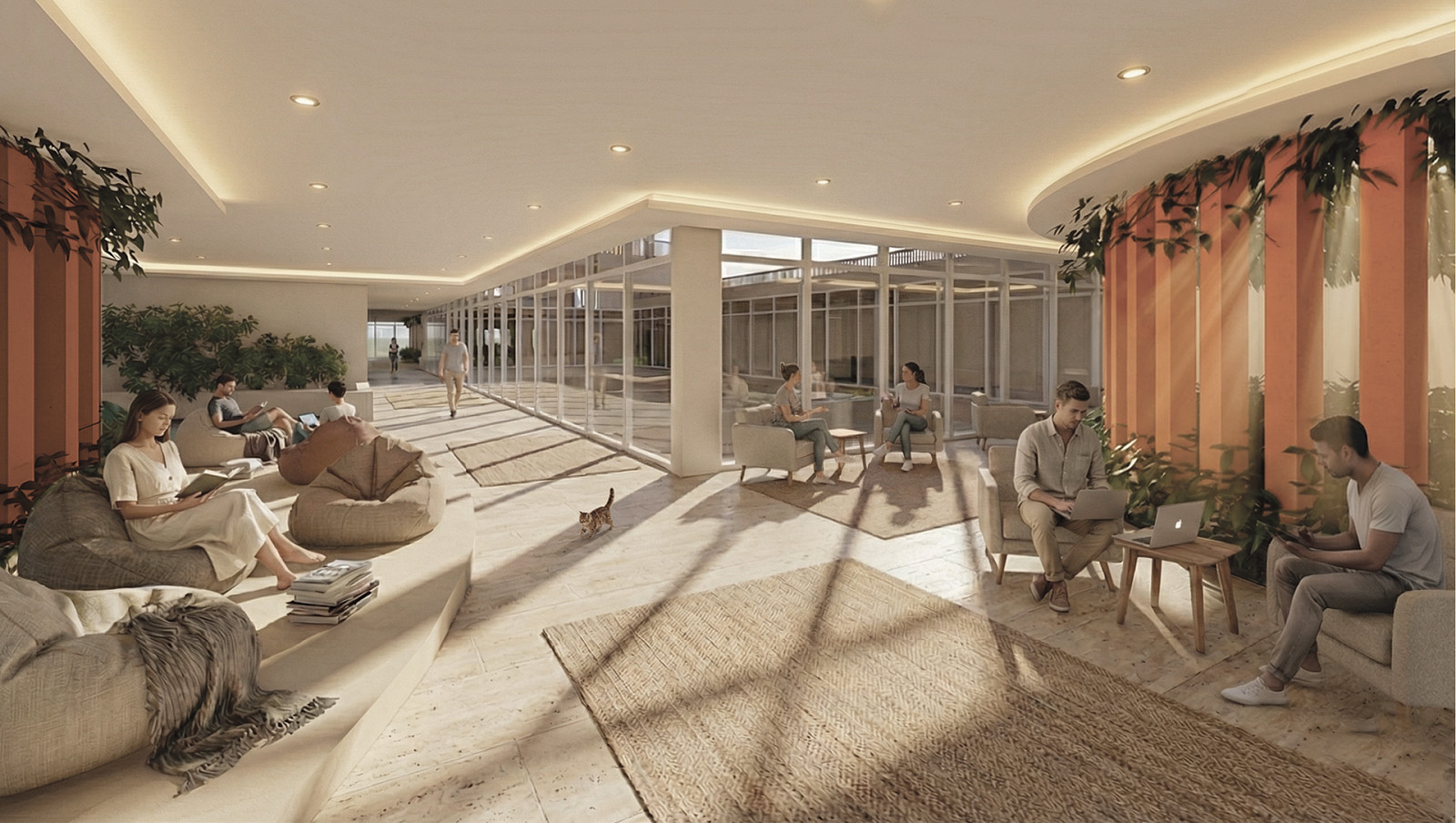
The second floor is dedicated to co-working spaces and wellness and well-being areas, providing a more controlled environment that supports productivity, health, and daily routines while remaining visually connected to the active ground level below. This floor acts as a transitional layer between public activity and more specialized uses.
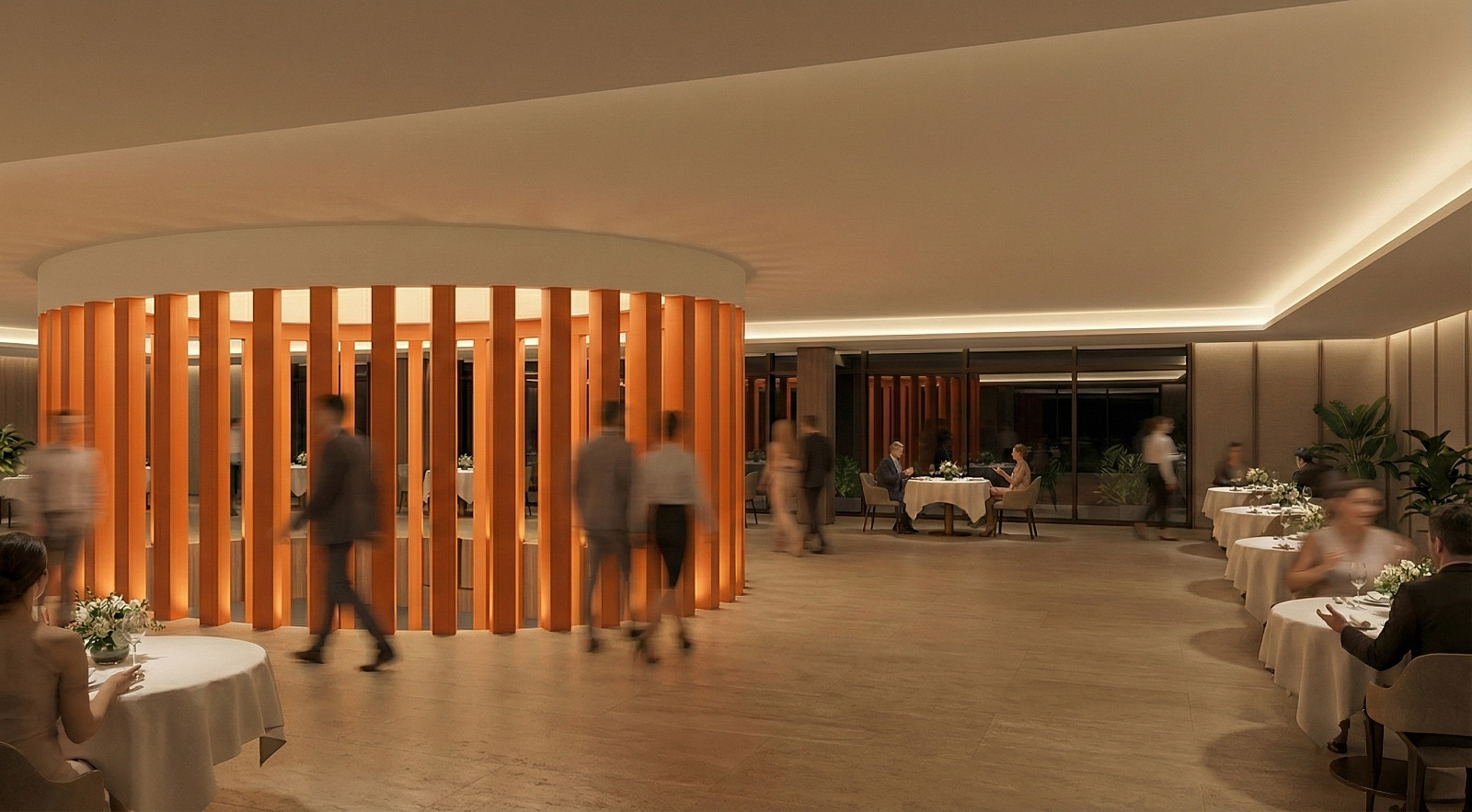
The third floor is reserved for a high-end restaurant, positioned to benefit from elevated views and a calmer atmosphere. This level functions as a social destination that attracts visitors while remaining integrated into the building’s vertical sequence.
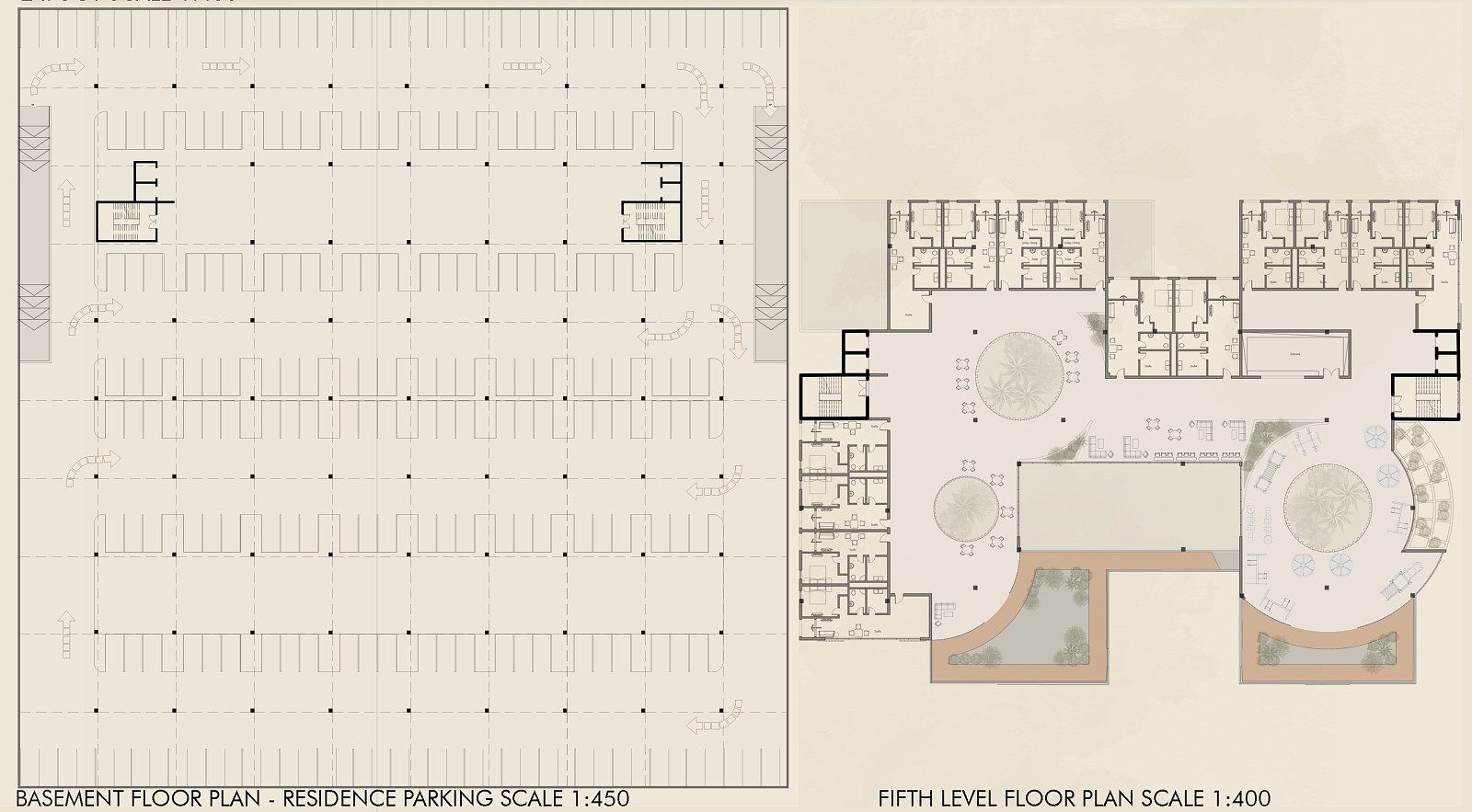
The fourth, fifth, and sixth floors are primarily residential, accommodating a mix of studios, apartments, and duplex units. These upper levels offer increased privacy while maintaining connection to the rest of the building through shared circulation spaces and visual links. Residential layouts are designed to support different household types within a cohesive community environment.
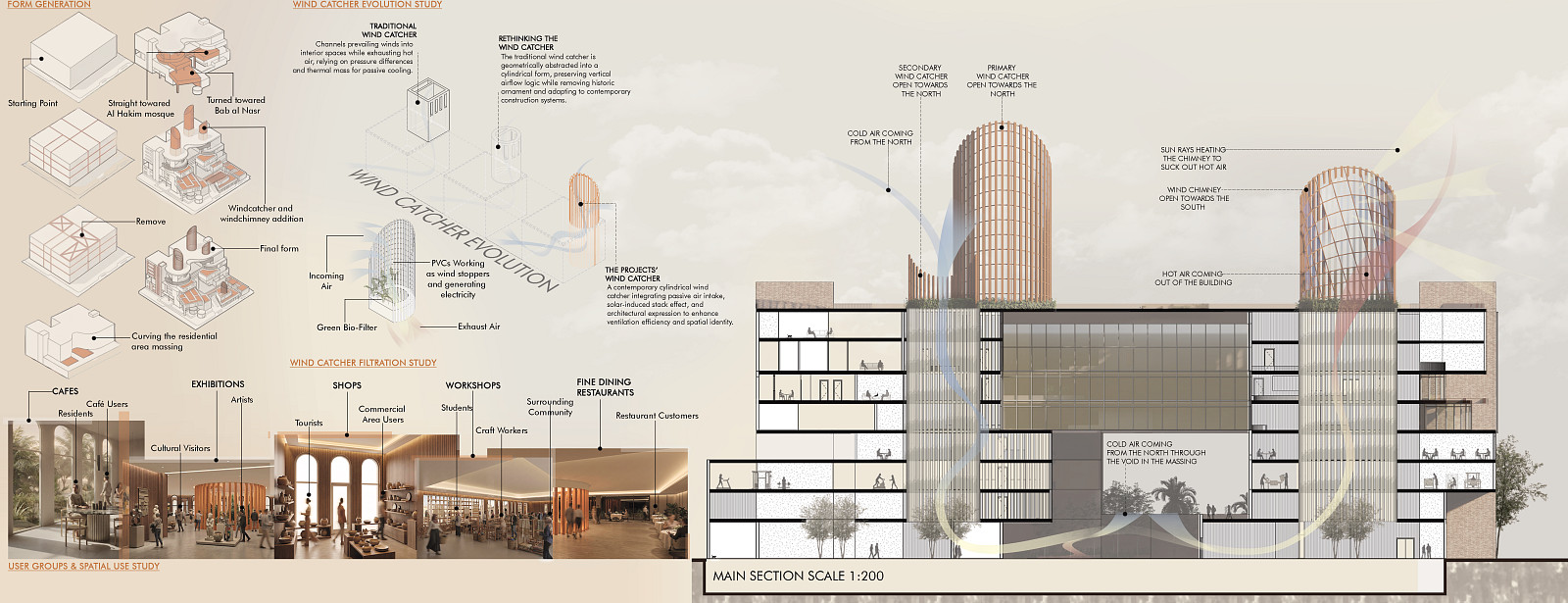
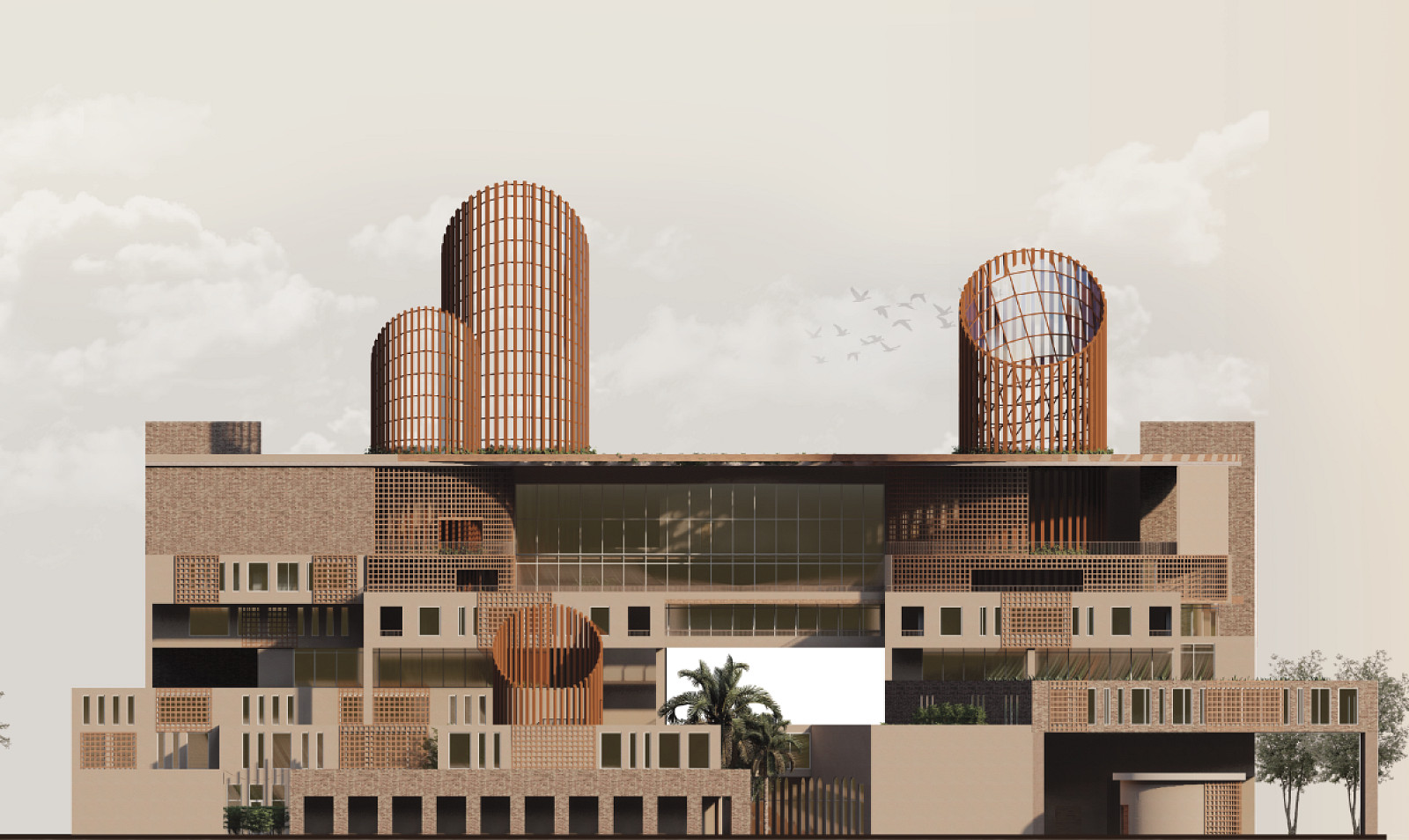
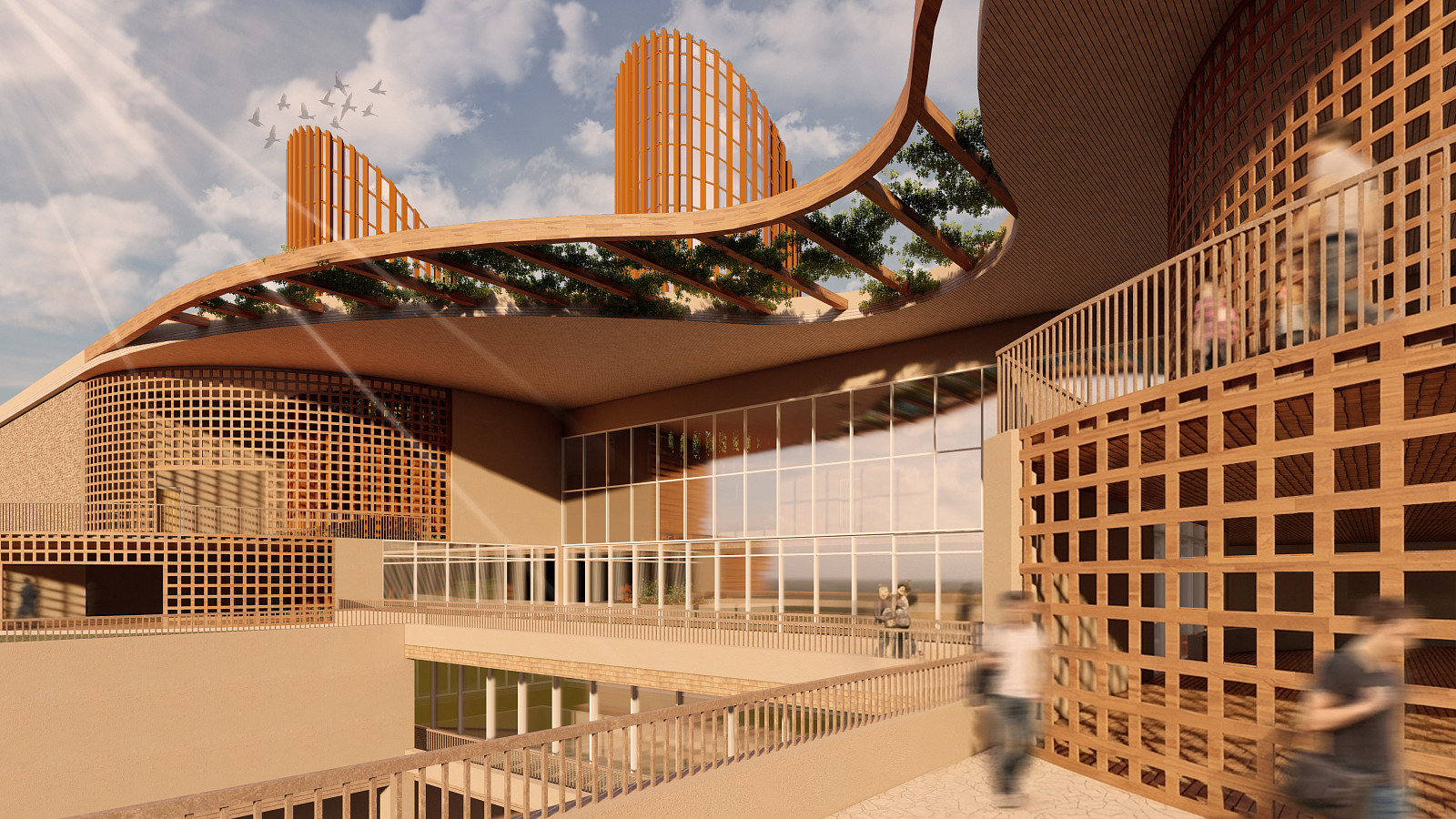
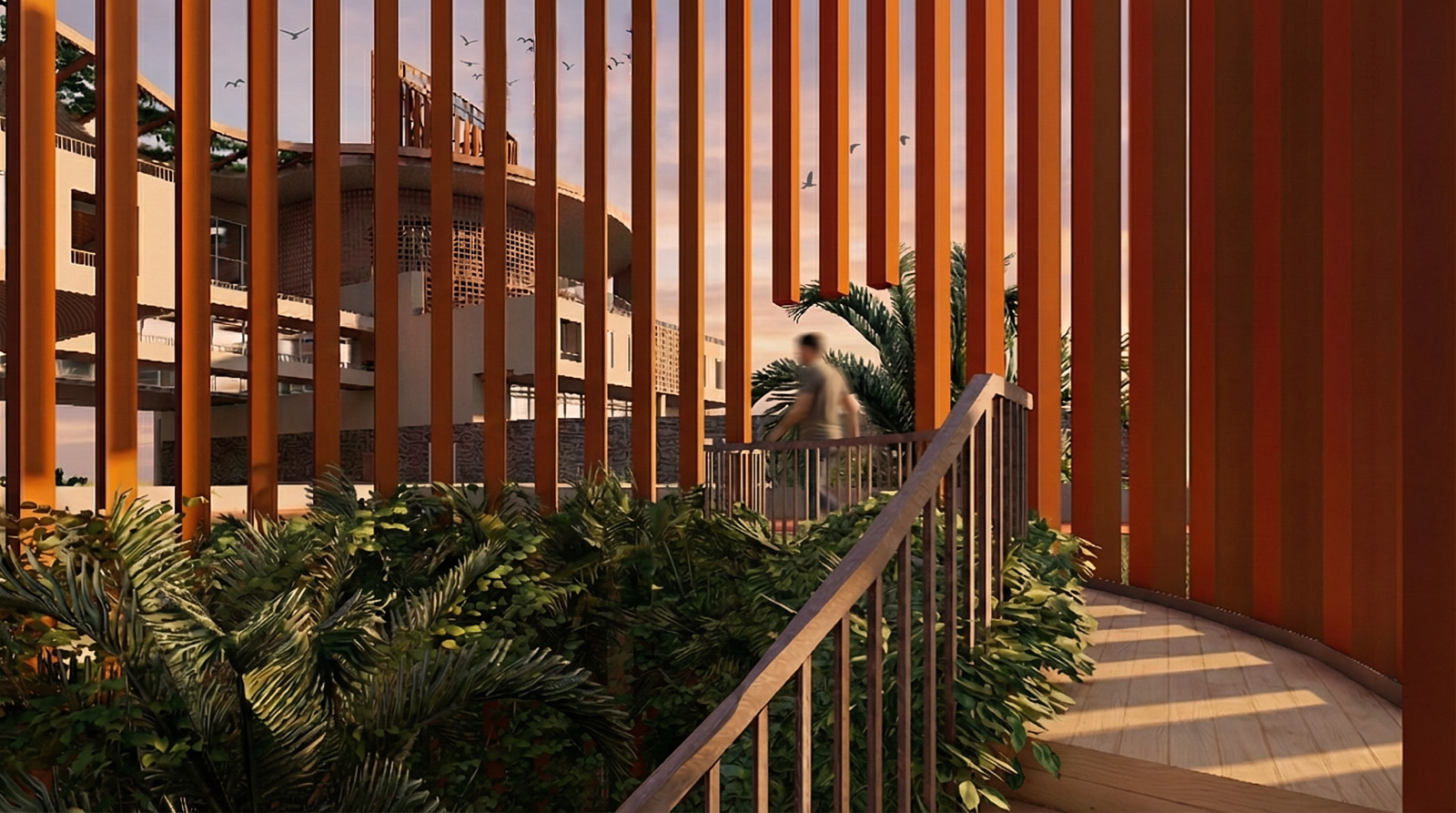
A set of vertical elements structures the project both visually and environmentally, drawing inspiration from the vertical elements of Islamic Cairo, such as minarets, wind towers, and traditional ventilation shafts. Two wind catchers and one wind chimney rise above the building mass, forming a contemporary reinterpretation of these historic elements. Rather than acting as symbolic forms, they function as climate-responsive devices that capture prevailing winds and enhance natural ventilation within working areas, workshops, and shared spaces.
The wind catchers guide cooler air downward through internal shafts, while the wind chimney operates through the stack effect, allowing warm air to rise and exit the building. Together, these systems reduce reliance on mechanical ventilation and contribute to indoor thermal comfort. Visually, the vertical elements act as urban markers within the skyline, referencing the layered verticality of Islamic Cairo while remaining integrated within a contemporary architectural language.
Climatic comfort and privacy are further addressed through an abstract interpretation of the mashrabeya. Instead of replicating traditional ornamental patterns, the project reinterprets the mashrabeya as a climatic and spatial principle. The facade system relies on depth, layering, and perforation to filter sunlight, reduce heat gain, and provide visual privacy while maintaining connection to the exterior. Openings are carefully proportioned and positioned according to orientation and program, and planted buffer zones beneath hallway windows add an additional layer of softness and privacy to interior circulation spaces.
Overall, the project reinterprets the spatial logic of historic Cairo its layering, thresholds, climatic intelligence, and mixed-use character within a contemporary architectural framework. By organizing functions vertically and avoiding physical and social enclosure, the project supports openness, coexistence, and everyday interaction while remaining deeply connected to its urban, cultural, and environmental context.
Technické informace
Structural System:
The project is primarily constructed using a reinforced concrete flat slab system organized on a regular structural grid to allow flexibility in space planning. Cantilevered areas are structurally supported through the integration of steel elements connected to the concrete slab edges, enabling extended horizontal projections while maintaining structural efficiency.
Environmental Strategy:
The environmental performance of the project relies on passive design principles derived from traditional architecture in Islamic Cairo. Semi-courtyards and internal voids support natural ventilation through pressure differences, enabling cross ventilation across working, commercial, and residential spaces. Two wind catchers and one wind chimney are incorporated to enhance airflow, directing cooler air into interior spaces and extracting warm air through the stack effect, reducing dependence on mechanical ventilation systems.
Facade System:
The facade is designed as an abstract interpretation of the mashrabeya, functioning as a climatic and spatial filter rather than an ornamental element. Through depth, layering, and perforation, the facade controls solar gain, filters daylight, and provides visual privacy while maintaining connection to the exterior. The system responds to orientation and programmatic needs rather than applying repetitive decorative patterns.
Material Strategy:
Facade finishes are based on earthy-toned materials that relate to the context of Islamic Cairo. Stone and textured surfaces are combined with contemporary wooden screening elements to achieve thermal comfort, durability, and visual continuity with the surrounding urban fabric.
Program Distribution:
Basement Level: Parking and service areas
Ground Floor Level: Commercial spaces, cafes, working areas, multipurpose units (MPUs), community workshops, and exhibition spaces
First Floor Level: Workshops
Second Floor Level: Co-working spaces and wellness and well-being areas
Third Floor Level: High-end restaurant
Fourth to Sixth Floor Levels: Residential units including studios, apartments, and duplexes

Copyright © 2026 INSPIRELI | All rights reserved. Use of this website signifies your agreement to the Terms of Use, Privacy Policy, and use of cookies.