"Reconnecting Roots: A Living Archive celebrating Ethnic Diversity"


Idea projektu
The idea of this project emerges from the gradual disappearance of vernacular knowledge and cultural identity among the ethnic communities of the Barind Tract of Bangladesh driven by climate stress, economic marginalization, and the dominance of homogenized modern development. As traditional building practices, crafts, and collective ways of living fade, both the communities and the wider society lose a vital source of resilience and cultural continuity. The project responds to this need by proposing a Living Archive—a shared space where ethnic knowledge is actively practiced, taught, and celebrated—reconnecting marginalized communities with mainstream society while preserving heritage as a living, evolving process rather than a static memory.
Popis projektu
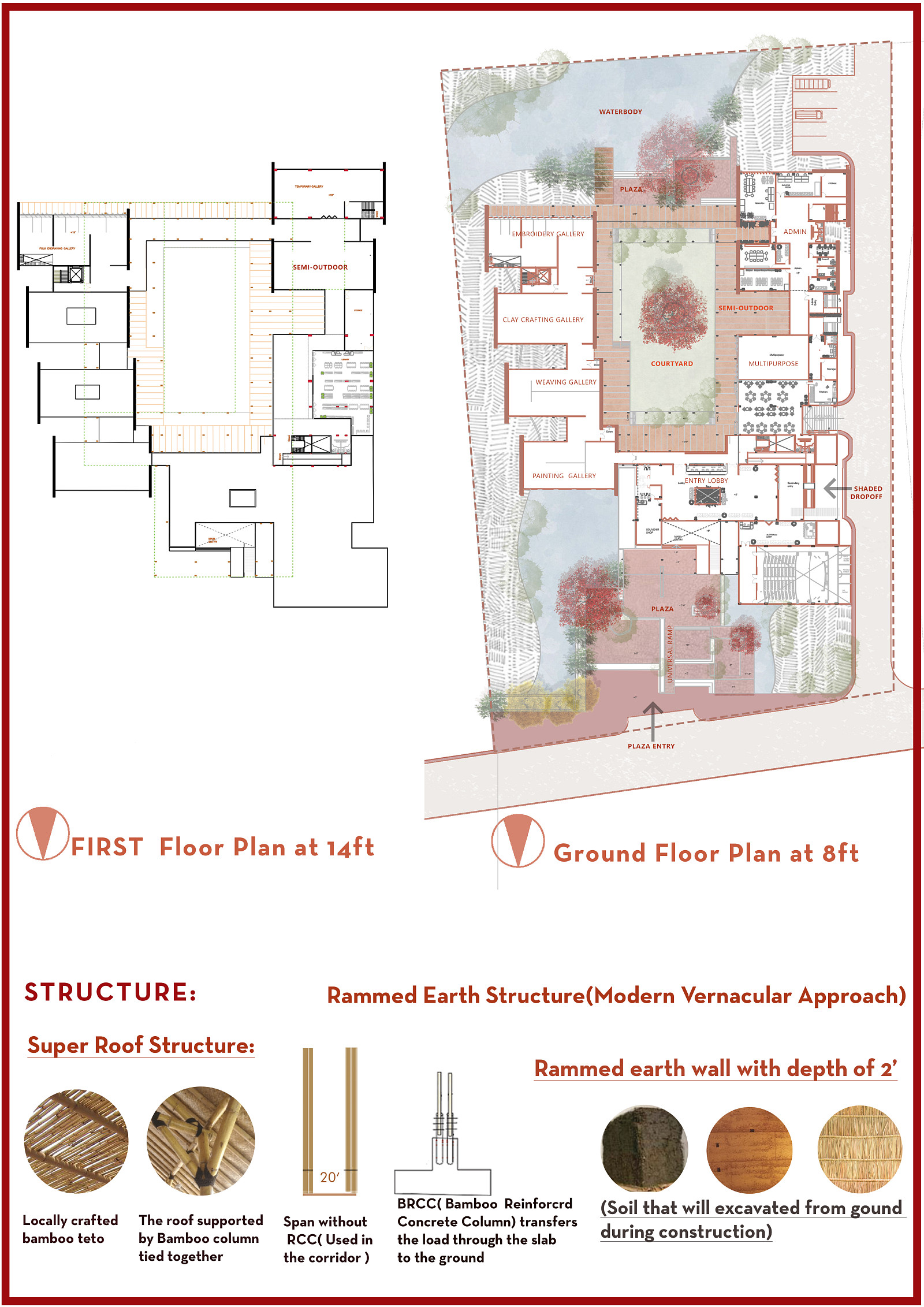
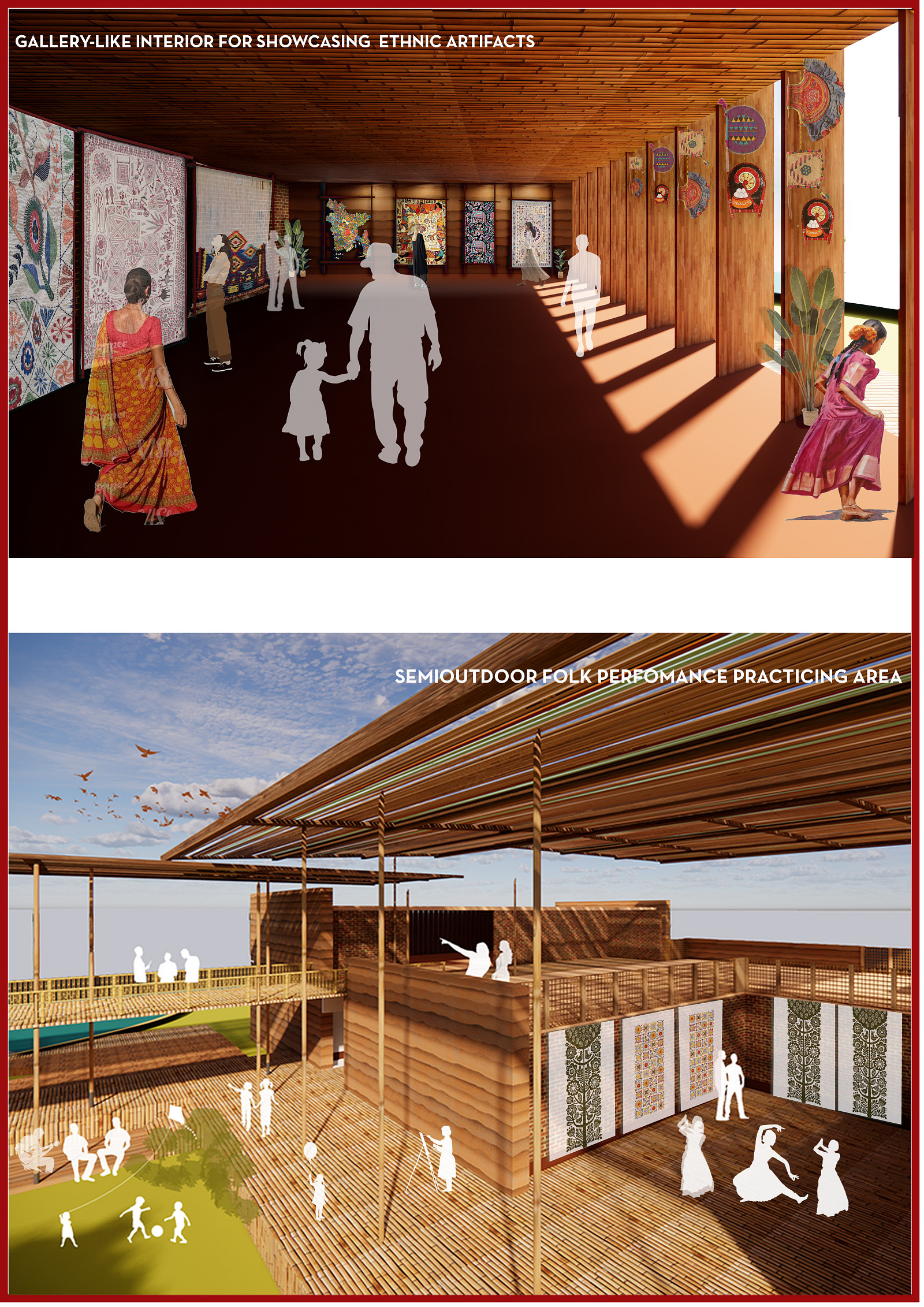
The project consists of a Living Archive complex designed as a multifunctional cultural and community space. The main component is the Archive Core, which includes exhibition and learning spaces for traditional building techniques, crafts, songs, rituals, and oral histories of the ethnic communities of the Barind Tract of Bangladesh. This core functions as both a knowledge repository and an active teaching environment.
Supporting this are dedicated craft practice and workshop areas, where community members can demonstrate and transmit traditional skills such as mud construction, bamboo work, and indigenous crafts. Community gathering spaces, including courtyards and shaded semi-outdoor areas, form the social heart of the project, enabling interaction between ethnic communities and visitors.
The project also incorporates open-air performance and festival spaces for cultural events, seasonal celebrations, and collective rituals. Water bodies, courtyards, and landscaped open spaces are integrated as climate-responsive elements, enhancing passive cooling and environmental comfort. Service and support functions—including administration, storage, and visitor facilities—are strategically placed to ensure smooth operation without disrupting communal activities.
Together, these components create an inclusive, climate-responsive environment that supports cultural continuity, community dignity, and public engagement, positioning the project as both a functional cultural infrastructure and a living social space.
Technické informace
The construction of the project is based on locally sourced, low-impact materials and climate-responsive building systems. The primary structural system consists of rammed earth walls formed using stabilized local soil from the Barind region, providing high thermal mass and indoor temperature regulation. Bamboo and timber are used for secondary structural elements, roof framing, screens, and shading devices due to their renewability, availability, and cultural relevance.
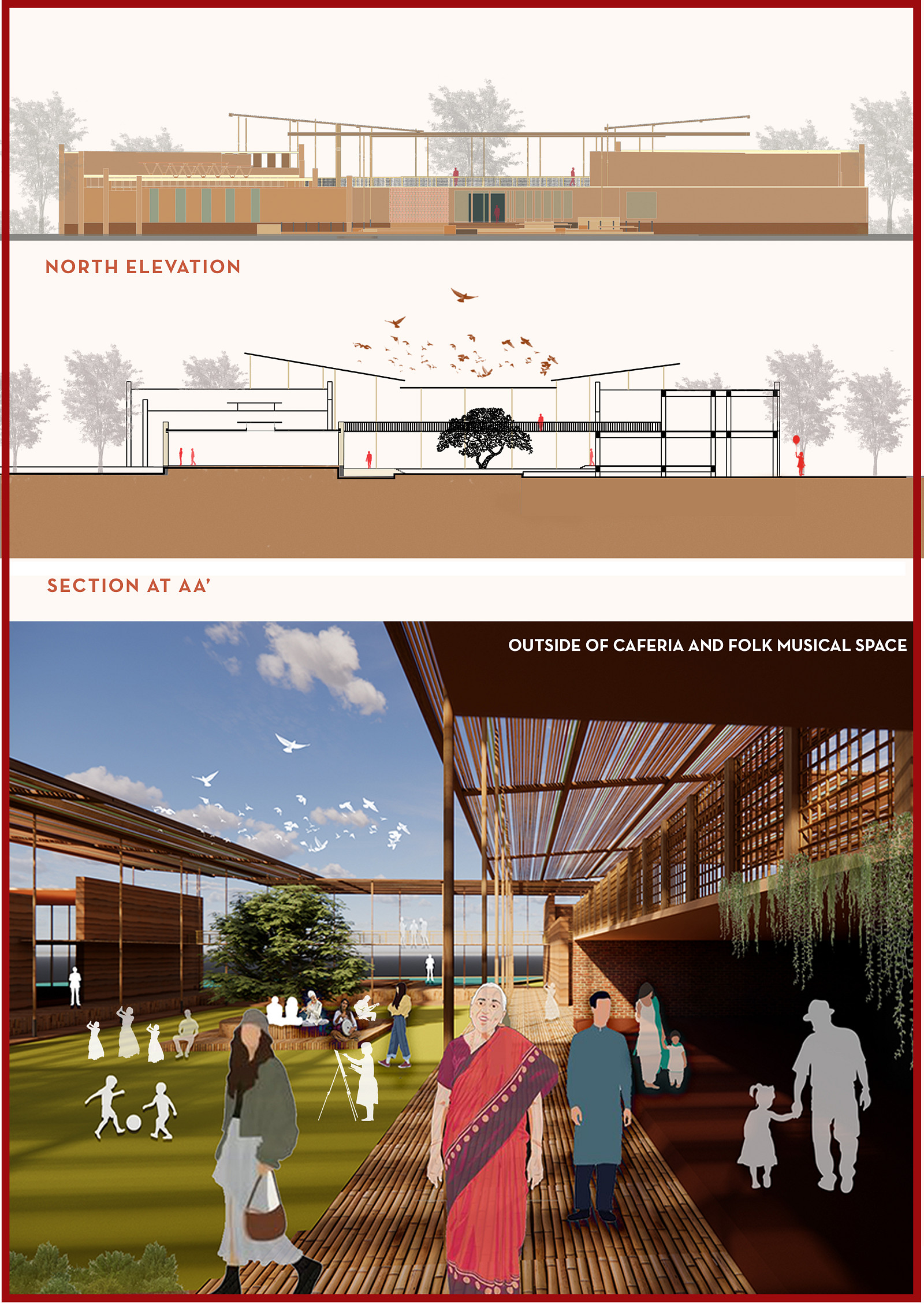
The roof system comprises a thatched super-roof supported on a lightweight timber and bamboo framework, creating shaded semi-outdoor spaces and protecting the inner envelope from direct solar gain. Skylights are integrated within the roof structure to allow controlled daylight penetration while minimizing heat gain. Wooden louvers are installed on façades to filter harsh sunlight and facilitate cross-ventilation.
The spatial layout incorporates courtyards and water bodies as passive cooling devices, enhancing evaporative cooling and air circulation. Rammed earth wall placement and building orientation are designed to reduce heat exposure and maximize natural ventilation. Flooring is finished with stabilized earth, stone, or locally available materials to ensure durability and thermal comfort.
The project employs passive environmental strategies as its primary climate-control system, minimizing dependence on mechanical cooling. Rainwater harvesting and surface water management are integrated into the landscape design. The construction approach prioritizes low embodied energy, ease of maintenance, and adaptability, ensuring long-term sustainability and community-led upkeep.


Copyright © 2026 INSPIRELI | All rights reserved. Use of this website signifies your agreement to the Terms of Use, Privacy Policy, and use of cookies.